How to go on safari ethically in Sri Lanka: the rules and what to ask your driver
Crowding and speeding jeeps have been reported in the busiest blocks.(Reported · last checked 23 Oct 2026) Most good practice is already written into the rules: DWC park rules, the SLTDA vehicle-safari guideline and the 2012 sea mammal regulations.
This page sets out our code, with each rule linked to where it comes from.
- Stay with your officer
Permit holders must remain with the officer assigned to them
Source: Gazette 2292/11 · Last checked: 23 Oct 2026
- Hours
Day visits 06:00–18:00
Source: Gazette 2292/11 · Last checked: 23 Oct 2026
- Vehicles
Safari routes, speed limits, animals' right of way, no feeding, registered vehicles
Source: SLTDA vehicle safari guideline · Last checked: 23 Oct 2026
- Whales
DWC-licensed boats with a registered guide; 100 m from whales, 50 m from other marine mammals; no swimming or diving with whales
Source: Gazette 1774/27; SLTDA whale and dolphin watching guideline · Last checked: 23 Oct 2026
- Drones
CAASL approval and MoD security clearance for every flight, plus prior approval (a No Objection Letter) for wildlife sanctuaries
Source: MoD drone page; CAASL Drones · Last checked: 23 Oct 2026
- Crowding
Heavy jeep congestion reported at Block 1 sightings(Reported · last checked 23 Oct 2026)
Source: Mongabay · Last checked: 23 Oct 2026
Why does safari behaviour matter in Sri Lanka?
Crowding has been reported at busy sightings.(Reported · last checked 23 Oct 2026) A sighting is shared, and the choices each vehicle makes shape it for everyone.
What are the rules inside the park?
Stay on the marked routes and keep to the posted limit; animals have right of way. Stay with your assigned officer, respect the 06:00–18:00 hours, and leave the vehicle only at designated points.
How close is too close?
Never block an animal's path or surround a sighting. If a queue builds, move on. No horns, music or banging, and no driving off the track, even for a leopard.
Can you feed wildlife?
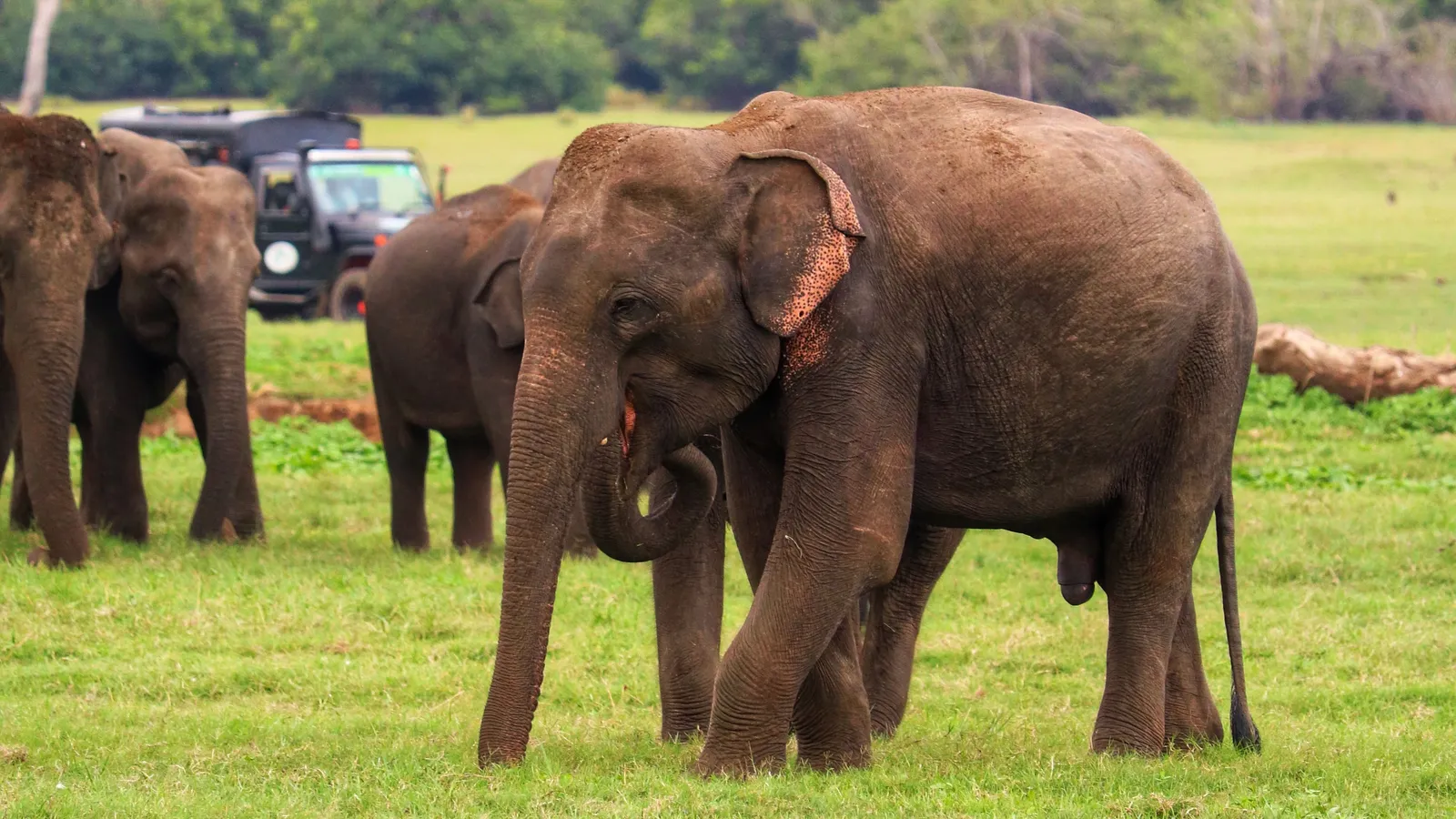
Never, and that includes elephants at the roadside or the fence line (SLTDA 2.5).
What about elephant rides and bathing?
We don't recommend rides, bathing, performances or captive photo stops. The Transit Home is covered in the questions below and on our Udawalawe guide.
Can you fly a drone?
Only with CAASL approval, MoD clearance and a No Objection Letter from the authority that manages the wildlife area. Don't assume it will be granted.
How do you watch whales responsibly?
Choose a licensed boat with a registered guide. Hold 100 m from whales and 50 m from other marine mammals, and never chase or block them. Within 300 m, no more than 3 vessels, at under 6 knots. No swimming with whales.
What about rubbish and plastic?
Take every bit of rubbish back out with you, and never throw anything from the vehicle. Our own habit: carry reusable bottles and bags.
What should you ask your driver or operator?
Are you DWC-registered and SLTDA-stickered (SLTDA 2.9–2.10)? Will you keep to the routes and limits? Will you leave a jam? For a boat: are you DWC-licensed, with a registered guide?
How do you visit communities respectfully?
Only through local hosts who invite you, on their terms. People are not a sight to be viewed.
Questions
Is it OK to ask the driver to get closer to a leopard?
No. Stay on the track and keep your distance.
Can I swim with whales or dolphins in Sri Lanka?
No. The regulations and the SLTDA guideline prohibit swimming or diving with whales.
Can I bring a drone to a national park?
Only with every approval in place, and you should assume it won't be granted.
Is the Elephant Transit Home ethical to visit?
It is a DWC project that rehabilitates orphaned calves and releases them. Watch from the viewing area, and don't touch or feed the calves.
Related
Sources
Reviewed by Lux Ceylon · last checked 23 Oct 2026 · Sources ↓